How a Dutch Sports Retailer Cut Overstock by 47% with AI Forecasting
Daka, an 18-store sports retailer in the Netherlands, replaced manual replenishment with an AI forecasting tool. Forecast accuracy went from 49% to 96% and overstock nearly halved. Here is what they did.
The starting point
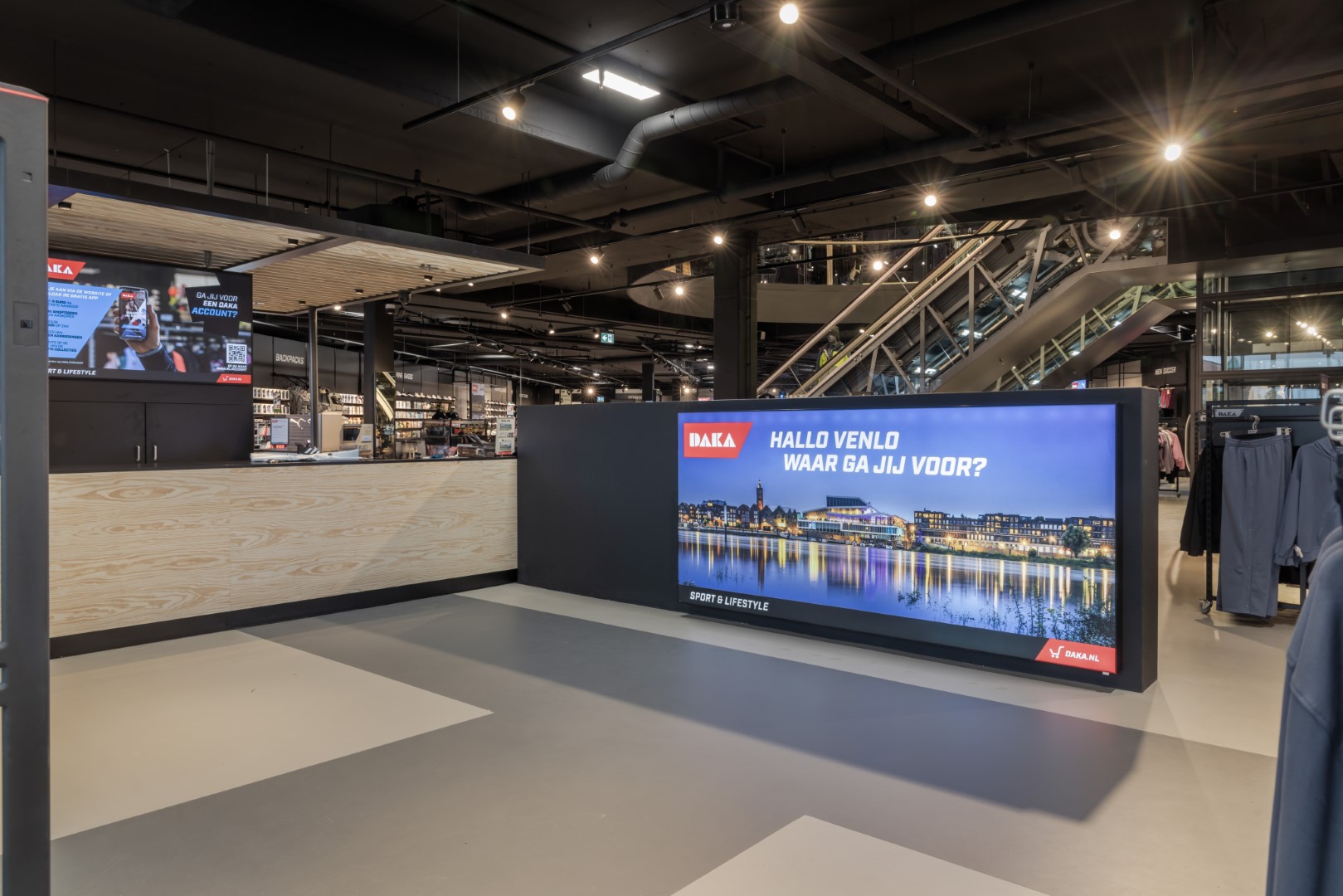
Daka is a Dutch sports and lifestyle retailer with 18 physical stores and an online shop. It sells around 636,000 products per season across 35,000 SKUs. That is a meaningful product range, but this is not a global enterprise. It is a regional sports retailer with a team that was doing replenishment the way most mid-size retailers do: manually.
The problem was familiar to anyone who has worked in retail operations. Demand forecasting was imprecise. The team overpredicted demand on more than half of their SKUs, leading to persistent overstock. At the same time, some lines sold out too quickly because stock was not allocated to the right stores at the right time. Broken size arcs, where popular sizes sell out while less popular sizes sit on shelves, were a recurring issue.
Daka reserves 18% of its total stock for replenishment, so getting those decisions right has a direct impact on full-price sell-through and margin.
What they did
Daka implemented the AI Replenisher from WAIR, an Amsterdam-based startup founded in 2019. WAIR's founder, Mitch van Deursen, also runs Shoeby (a 240-store fashion retailer), and the product was born from his own frustration with the limitations of traditional forecasting in fashion retail.
WAIR's system uses a deep learning model called ForecastGPT-2.5 with 7.5 million parameters. Unlike traditional statistical forecasting, it processes multiple dimensions simultaneously: sales data, product attributes, individual store performance, pricing, weather forecasts, marketing activity, holidays, local events, and even product images.
The model forecasts demand at SKU-store level, up to 14 days ahead, and continuously refines its predictions as new data arrives. It does not just learn from Daka's data. It draws on patterns across WAIR's entire client base, which includes Ralph Lauren, The North Face, Steve Madden Europe, and VF Corporation.
Critically, the implementation was fast. WAIR plugged into Daka's existing Microsoft Dynamics 365 ERP system through ACA Fashion Software's XPRT solution. The integration took seven days. Not seven months. Seven days.
Once connected, the system automatically adjusts min/max stocking limits in the ERP based on demand trends, replacing the manual decisions that were previously made by the buying and merchandising team.
The results
| Metric | Before (Manual) | After (WAIR AI) |
|---|---|---|
| Forecast accuracy | 49% | 96% |
| Overprediction rate | 50–51% | 4% |
| Overstock reduction | - | 47 percentage points |
| Correctly predicted SKUs | ~312,000 | ~611,000 |
| Implementation time | - | 7 days |
Those numbers are striking. Going from 49% to 96% forecast accuracy is not an incremental improvement. It is a step change. And the overstock reduction - 47 percentage points - translates directly into fewer markdowns, better full-price sell-through, and improved margin.
For context, WAIR's other major client, Shoeby (240 stores), saw a 2.96% revenue boost and 4% increase in inventory turnover from the same technology.
What makes this case interesting
It is a mid-size retailer, not an enterprise
Daka has 18 stores. It is not Amazon, Zara, or even a national chain. The fact that AI forecasting of this quality is now accessible to retailers of this size is the story. WAIR's stated mission - "top-shelf technologies should be accessible to retailers of all sizes" - is backed up by this deployment.
The speed of implementation matters
Seven days from start to live. That is possible because WAIR integrates with existing ERP systems rather than requiring a new data platform. Daka did not need to build a data lake, hire data engineers, or run a six-month integration programme. They connected a tool to their existing infrastructure and started getting better forecasts immediately.
The improvement is not marginal
Going from 49% to 96% accuracy is not a 10% improvement on an already decent process. It is replacing a process that was essentially a coin flip with one that is nearly always right. That kind of step change is rare, and it happened because deep learning models can find patterns in retail demand that traditional statistical methods and human judgement simply cannot.
It solves a specific operational problem
This is not "AI transformation" in the abstract sense. It is a single tool solving a single problem: how much stock to put in each store, for each product, each week. The scope is narrow. The impact is measurable. The operational change is contained to the replenishment process. That is what a good AI experiment looks like.
Lessons for your programme
Look for processes where human judgement is provably inaccurate. Daka's team was getting it right about half the time. That is not because they were bad at their jobs - fashion demand is genuinely hard to predict with traditional methods. The lesson is that some problems are better suited to AI than others, and demand forecasting in retail is near the top of the list. Section 4: Opportunity Identification has the framework for identifying where AI will have the biggest impact.
Integration speed determines adoption speed. Seven days to go live meant Daka saw results before internal scepticism could build. If this had taken six months, the project would have faced the same political and budgetary headwinds that kill most technology initiatives. When evaluating AI tools, ask how long it takes to connect to your existing systems. Section 5: Technology Landscape covers how to evaluate AI solutions.
You do not need to build - you can buy. Daka did not train its own machine learning model or hire a data science team. It plugged into a purpose-built SaaS tool that was already trained on fashion retail data. For most mid-size businesses, buying a proven solution will deliver faster results than building one from scratch. Section 5: Technology Landscape helps you make the build-vs-buy decision.
Measure the before state properly. The power of this case study comes from the clarity of the before/after comparison. Daka knew their forecast accuracy was 49%. They knew their overprediction rate was 50%. Without those baseline measurements, the improvement would be anecdotal rather than provable. Section 7: Experimentation covers how to set up experiments with clear baselines and success metrics.
Sources
- Daka Case Study (WAIR)
- The AI Replenisher (WAIR)
- WAIR Technology (WAIR)
- From inception to ROI innovation: the remarkable journey of WAIR (FashionUnited, 2023)
- WAIR Amsterdam event unites fashion leaders for AI (FashionUnited, 2024)